Author: Matthew McLean
Round 19 of the Cooperative Research Centres Projects (CRC-P) program funded 30 of 306 applications, a success rate of under 10%. The total pool was $81 million, up from $66 million across 27 projects in Round 18. The average grant rose from about $2.44 million to $2.71 million (against a program cap of $3m).
The outcomes included $20 million ring-fenced under the Government's AI Accelerator initiative. The next round is typically opened shortly after the previous round's recipients are announced, so if you're thinking about Round 20, this list of winning projects might be the best evidence of what assessors are looking for.
What the winners looked like
The winning projects were AI-heavy, close to the $3 million maximum, and well co-funded by industry.
AI went far beyond the ring-fence. 23 of the 30 descriptions name AI or machine learning in the project description. Together they received about $60 million, triple the $20 million AI allocation. AI showed up in projects on solar modules, fire-rated wall panels, PVC recycling and cattle embryos.
Most successful applicants asked for the maximum. 14 projects received the full $3 million, and 21 of 30 received $2.9 million or more. The one clear outlier was a $351,154 grant for a 14-month recycling pilot; every other grant was at least $1.68 million.
Industry co-investment was deep. Total project value averaged 2.6 times the grant, against a 2x floor under program matched funding requirements. The range ran from 2.0x to 4.1x, with LatConnect 60's $12.3 million maritime intelligence project at the top.
Consortia were broad. The minimum program requirement is three partners: two industry partners, including the SME lead, and a research organisation. Most successful projects went further than this. 18 of the 30 had more than the minimum, and 10 had six or more partners, often mixing a large corporate, end users and the research partner.
Sovereign capability was a common story. Almost every description ties the project to Australian sovereign capability, national security, fuel or energy security, or export growth.
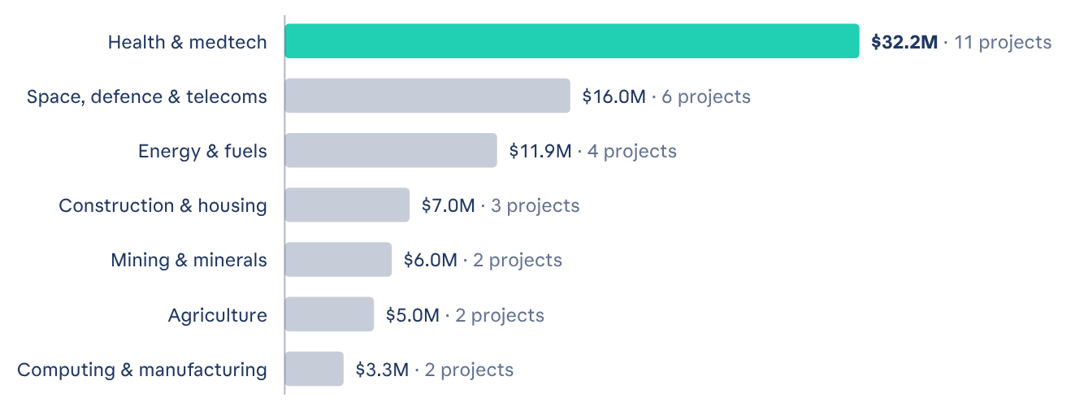
Intellect Labs analysis of the published Round 19 project list · sector groupings are our own
In our grouping, health and medtech led on both count and dollars, followed by space and defence. Agriculture and mining won two projects each. Nine of the 11 health and medtech projects name AI or machine learning as central to the work.
Lessons for Round 20 applicants
Round 19 rewarded applications that were commercially grounded, well funded by industry and easy to link to national priorities.
Be ambitious with your project size. Because every project is scored against the others, a bigger scope with more outcomes tends to score better. But ambition must stay realistic with the project being achievable in the timeframe and co-investment being able to be funded by the partners. If the work and the partners support it, plan for a grant near the $3 million cap and co-investment above the minimum.
Know where you sit against the round's priority. Round 19 set aside $20 million for AI, yet AI projects won 23 of the 30 grants and about $60 million. Only seven projects without an AI focus were funded. Priorities change from round to round (Round 18 favoured robotics and automation), so check Round 20's as soon as they are published. If your project fits, make the link explicit. If it does not, expect your odds to be lower.
Lock in your industry partners early. The rules require an SME lead, a second industry organisation and a research partner. The successful projects went further and included end users or a large corporate who will buy or deploy the result.
Quantify your claims. Diesel displaced, hospital hours saved, cost reductions, export markets opened. Many winning projects put numbers on their outcomes and it’s likely this quantification ran throughout their applications making for a robust case.
What the Round 19 winners do now
For the 30 Round 19 recipients, winning the grant is the start of up to three years of obligations, set by the grant agreement rather than the application. The main ones:
Milestone reporting with evidence of activities, spend and partner contributions
Managing the consortium, with the SME lead responsible for every partner's deliverables
Financial acquittals, and possibly an independent audit
Approval for changes to scope, budget or partners
Obligations after the project ends, such as record keeping and outcome reporting
We cover each of these in detail in Winning Grants: The Fine Print.
Getting ready for Round 20
Intellect Labs helps companies plan and prepare competitive CRC-P applications. If you are considering Round 20, we can help you:
test whether your project and consortium fit what Round 19 rewarded
build a realistic budget and co-investment plan with your partners
shape the application around quantified, achievable outcomes, then support reporting, compliance and independent audits once you win
Contact us for a Round 20 readiness conversation before the round opens.
Sources
CRC-P Grants program page, business.gov.au: Round 19 outcomes, rule changes, future rounds
CRC-P Round 18 outcomes, business.gov.au: Round 18 funding and priorities