Authors: Matthew McLean, Joel Spotswood, Luke Matthyssen
From 1 January 2027, Australian organisations will be eligible for direct European Union funding through Horizon Europe – the world’s largest pooled funding program for international research and innovation collaboration. This represents significant opportunities for global funding, collaboration and innovation opportunities for Australians operating in advanced manufacturing, critical minerals, health, energy, agriculture and other research-intensive industries.
What is Horizon Europe?
Horizon Europe is the European Union’s flagship research and innovation funding program. It supports collaborative projects that address major societal and industrial challenges, from climate change and public health to advanced materials and digital technologies.
The European Commission current program budget is €93.5 billion over a seven year period from 2021-2027. The European Commission currently has a proposal tabled for a further €175 billion commitment for 2028-2034 with a view for supporting ‘moonshot’ projects in areas of clean aviation, space economy and next-generation AI.
Rather than accepting unrestricted project pitches, Horizon Europe publishes defined calls for proposals. Each call sets out a problem to solve, expected results, eligibility conditions, budget and application deadline. Successful applicants receive funding to carry out a shared research and innovation program.
What has changed for Australia?
Historically, Australian organisations could join Horizon Europe bids, but only as a third part - generally financing their own participation unless an exception or complementary funding arrangement applied.
Australia’s Minister for Industry and Innovation and Minister for Science, and the European Commissioner for Startups, Research and Innovation signed a treaty on 12 November to progress towards Australia’s association with Horizon Europe in 2027.
Under the planned arrangements, eligible Australian entities will be treated like organisations in other associated countries for Pillar II calls from 1 January 2027, including the ability to receive EU grants directly and coordinate international consortia.
Association is not a guarantee of funding or access to the full program budget. Australian applicants will compete against other eligible teams for the same published calls. The separate Horizon Europe proposal for 2028 to 2034 does not automatically form part of Australia’s 2027 association.
What funding can Australians access?
Australian association covers Pillar II, Global Challenges and European Industrial Competitiveness. Pillar II comprises six thematic clusters:
Health: medical research, disease prevention, care systems and health technologies.
Culture, Creativity and Inclusive Society: social innovation, cultural heritage and inclusive communities.
Civil Security for Society: disaster resilience, cybersecurity and other civilian security challenges.
Digital, Industry and Space: advanced manufacturing, AI, raw materials, digital infrastructure and space technologies.
Climate, Energy and Mobility: clean energy, batteries, decarbonisation and sustainable transport.
Food, Bioeconomy, Natural Resources, Agriculture and Environment: agtech, water, biodiversity, circular systems and the bioeconomy.
Within the Horizon Europe funding envelope, the main grant instruments are:
Research and Innovation Actions (RIA), typically funding up to 100% of eligible costs;
Innovation Actions (IA), typically funding up to 70% for for-profit participants and up to 100% for eligible non-profit participants; and
Coordination and Support Actions (CSA), typically funding up to 100% for activities such as coordination, networking and studies.
The specific call terms govern funding rates and eligibility.
How much funding is available?
Australia does not receive a dedicated national allocation. The opportunity is to compete for relevant Pillar II calls, for which the Australian Government cites more than €53.5 billion across the 2021 to 2027 framework. Only eligible 2027 calls will be directly accessible under the new association arrangements.
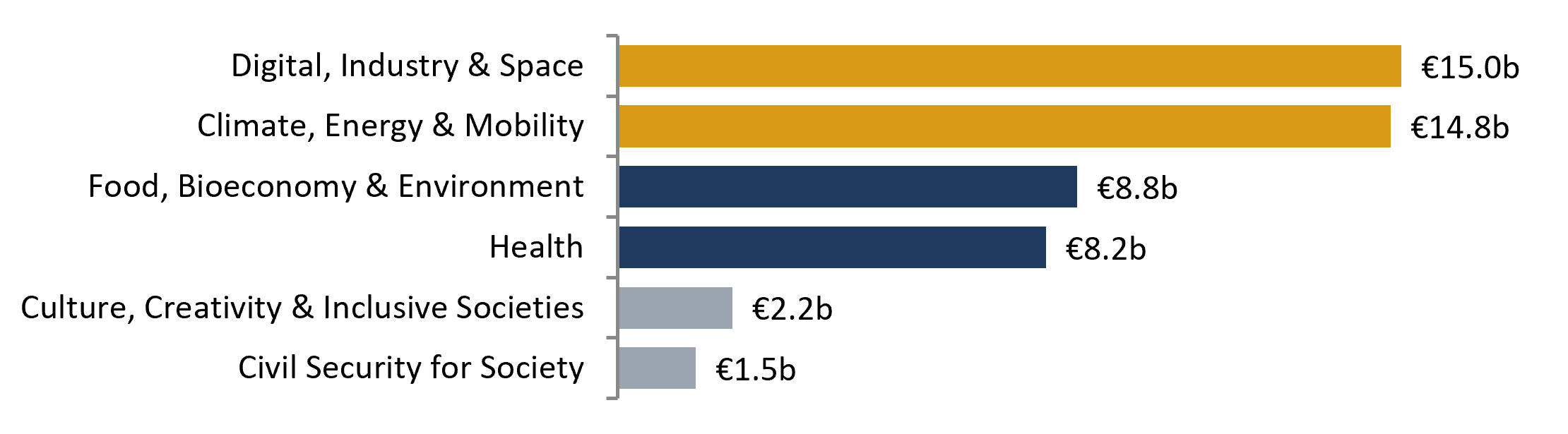
Fig 1: Indicative Pillar II cluster allocations, 2021 to 2027
A September 2026 European Commission update reports approximately €61 billion invested through grants and €1.3 billion through equity in nearly 23,000 Horizon Europe projects through July 2026. The amended 2026 to 2027 main work program provides around €14.8 billion across relevant program areas.
European Commission data reports an average grant size of €2.7 million across the whole program, compared with approximately €7.2 million for Cluster 4, €7.0 million for Cluster 5 and €5.9 million for Cluster 6.
Who can apply?
A broad range of legal entities can participate, including Australian companies of all sizes, startups, universities, research institutes, government bodies and non-profit organisations. Applicants must have the capacity to carry out the proposed work, and some topics impose additional technical, geographic or security conditions.
Most collaborative Pillar II calls require at least three independent organisations established in three different EU Member States or associated countries, including at least one EU Member State. For example, an Australian technology company could partner with a German manufacturer and a French end-user. Additional partners might include an Australian university, a specialist testing facility or an international supply-chain partner.
The strongest consortium is not necessarily the largest. It is the one that collectively supplies the research, engineering, validation, commercial and policy expertise needed to deliver the specific topic outcomes. Australian-led technical work can be significant, but the proposal must also demonstrate meaningful value to Europe.
What types of projects are funded and how do calls work?
Horizon Europe uses work programs to organise funding priorities into clusters, destinations, calls and individual topics. These work programs will typically specify the scope, indicative topic budget, typical EU contribution per project, action type, deadlines and any special conditions. Some calls have a single application stage, while others use an initial short proposal followed by an invited full proposal.
For Pillar II funding opportunities, each cluster has is its own work program which is further divided into strategic themes and individual topics. Work programs typically cover up to two years of funding opportunities allowing prospective applicants to review alignment, prepare bids and plan submissions.
What’s open for funding now?
Currently available opportunities are covered by the 2026–2027 Work Program, as the final two-year programming cycle of the current 2021-2027 Horizon Europe funding envelope. For Pillar II, this includes work programs against all clusters divided into ‘Open’ topics that are currently open and closing between January and March 2027 and ‘Upcoming’ topics set to open between Dec 2026 and August 2027. Each topic will have its own specific opening and closing date so prospective applicants should review the published 2027-2027 Work Program closely.
An extract containing examples of currently open calls, is tabulated below. Note these are just examples to indicate project type and scope, there are over 100 individual topics contained within the 2026-27 Work Program across the Pillar II clusters.
| Cluster | Topic | Grant Instrument | Project Funding | Closing Date |
|---|---|---|---|---|
| 1 – Health | Clinical trials for advancing innovative interventions for neurodegenerative diseases | RIA | €10M | 17 Feb 2027 |
| 1 – Health | Innovative healthcare interventions for non-communicable diseases | RIA | €7–8M | 17 Feb 2027 |
| 1 – Health | Development of novel small molecule antiviral therapeutics for pathogens with epidemic potential | RIA | €9–11M | 17 Feb 2027 |
| 4 – Digital, Industry & Space | Energy efficiency and sustainability of AI data processing in Data Centres | IA | €10M | 18 March 2027 |
| 4 – Digital, Industry & Space | Innovative advanced materials and new production processes – reducing dependencies on Critical and Strategic Raw Materials | IA | €6–7.5M | 2 Feb 2027 |
| 4 – Digital, Industry & Space | Advanced manufacturing for key products | IA | €6–8M | 2 Feb 2027 |
| 5 – Climate, Energy & Mobility | Advancing understanding, modelling and prediction of extreme events in a changing climate | RIA | €6M | 4 March 2027 |
How should Australian organisations prepare?
Identify the right topic. Review the 2026 to 2027 work programs and filter the Funding & Tenders Portal for 2027 Pillar II calls in your technology area.
Map potential collaborators early. Seek European manufacturing, research, pilot-site or customer partners capable of delivering outcomes that an Australian organisation cannot demonstrate alone.
Register on the Funding & Tenders Portal. Obtain an EU Participant Identification Code (PIC) for each beneficiary and allow time for validation before grant signature.
Build an EU-focused impact case. Explain how Australian capabilities support European needs, such as supply-chain resilience, clean industry, sustainable production or improved health outcomes.
Develop a joint project plan. Agree on work packages, partner responsibilities, costs, IP ownership, commercialisation routes, reporting obligations and the delivery timetable before the deadline.
For Australian R&D-intensive organisations, the opportunity is significant but leveraging this opportunity will require aligning Australian expertise, networks and collaborations with a European challenge that we are uniquely equipped to address.